The Mid West Energy and Environmental Profile
1.0 EXECUTIVE SUMMARY
This report sets out the results of a survey of base-line data that quantifies energy supply and consumption in the Mid West area and the resulting emissions of greenhouse and polluting gases for the year 1995.
This information comes at a critical time, as the UK Government has adopted a new and ambitious target to reduce greenhouse gas emissions by 20% from a 1990 base by the year 2010. This will require all sectors to come together for concerted action to meet this target.
This information though incomplete in some aspects forms the most comprehensive picture available of the environmental impact of energy use and supply in the Mid West area. It provides clear indications of where environmental improvement programmes should be targeted in order to gain the maximum impact.
1.1 Key Findings and Recommendations
The main findings of the survey are as follows:
- Overall emissions levels resulting from energy use and supply in the Mid West area (measured on a per capita basis) are very similar to the national averages. However, these overall figures mask some areas for concern.
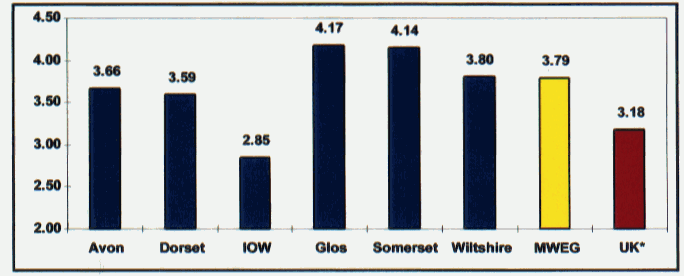
- CO2 emissions from electricity use in the Mid West area are 19% higher than the national average.
- CO2 emissions from car use in the Mid West area are 6% higher than England and Wales when measured on a per capita basis.
- Programmes to reduce emissions should be targeted
at:
- - Domestic electricity use
- - Commercial electricity use
- - Private car use
- The Mid West area has 6.5% of the renewable capacity supported by NFFO in England and Wales.
Forming a complete picture of the current energy situation in the Mid West area has been hampered by the difficulties of gaining access to information. The recommendations that follow are suggestions for changes that would facilitate the process of collecting base-line information:
- There should be a regulatory requirement placed on companies distributing electricity and gas, to supply consumption data for domestic and small commercial consumers on the basis of four figure postcodes. This information should be collated and made available free to local authorities by a central agency such as the energy regulators or the Environment Agency.
- All companies with a turnover in excess of £500,000 per annum should be required to publish their total energy consumption by fuel per £1,000 of turnover in their annual reports.
- The DETR should provide incentives for Local Authorities of all sizes to employ staff with specific responsibilities for energy management in council buildings. Such staff should have a specific brief to reduce the environmental impact of energy use in the Local Authority estate.
- Local Authorities should include in their energy procurement criteria, the requirement that renewable energy and combined heat and power should be used in preference to conventional energy supply. In addition, Local Authority annual reports should state the proportion of their energy purchases coming from renewable energy and combined heat and power.
- The DETR in conjunction with the Local Government Association should fund work to establish a nationally recognised methodology for making regional assessments of environmental impact of energy use and supply.
These recommendations are discussed in greater detail in section 7 of the report. The remainder of the executive summary provides an overview of the Mid West area highlighting the infbrmation that supports the main findings.
1.2 Energy Consumption in the Mid West Area
The Mid West area has a population of 3.4 million people, which is 5.8% of the UK population, only 5.6% of the UK consumption of the three main fuels occurs in the region.
The Mid West area consumes proportionately more electricity than the UK as a whole. This is balanced out by the lower consumption of gas (the main heating fuel) accounted for by the lower proportion of homes connected to gas.
The proportion of oil consumed in the MWEG area is similar to that elsewhere in the country. The Mid West area accounts for 6.8% of the fuel used by cars in England and Wales while having 6.6% of the population (Note: in the transport section data on car use is based upon that of England & Wales whilst in all other sections data refers to the UK. ) There are high levels of ownership and car use by inhabitants in the region. There are 427 cars per thousand population in the Mid West area compared to an average of 363 in England and Wales.
TABLE 1.1: Energy consumption by Fuel In the Mid West Area
| Region (GWh/Year) |
Gas
|
Oil
|
Electricity
|
| Avon |
8,143.00
|
6,348.00
|
5,481.00
|
| Dorset |
5,455.00
|
4,234.00
|
3,695.00
|
| Isle of Wight |
886.00
|
592.00
|
542.00
|
| Gloucestershire |
5,176.00
|
3,328.00
|
3,500.00
|
| Somerset |
4,025.00
|
3,455.00
|
3,021.00
|
| Wiltshire |
5,282.00
|
4,820.00
|
4,073.00
|
| MWEG |
28,958.00
|
22,778.00
|
19,640.00
|
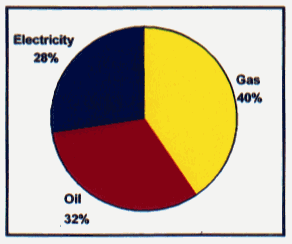
FIGURE 1.1:The Fuel Split in the Mid West Area
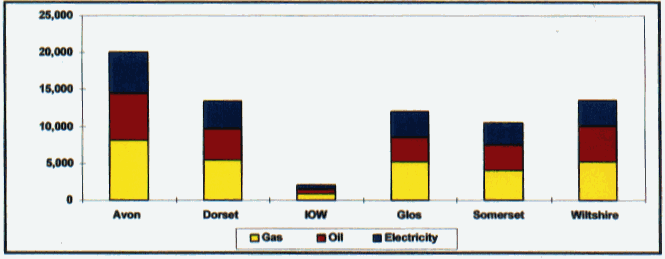
Energy consumption of all three main fuels is highest in the former County of Avon which has the largest population concentration in the City of Bristol, see Figure 1.2.
FIGURE 1.2: Energy Consumption by Fuel (GWhIYear)
The Mid West area has relatively little energy intensive industry and a high concentration of commercial companies. This is reflected in the consumption breakdown by sector shown in Table 1.2.
TABLE 1.2: Energy Consumption by Sector and Fuel
|
Fuel (GWh/Year) |
Domestic
|
Commercial
|
Industrial
|
Public Sector
|
Agriculture
|
Cars
|
Total
|
| Gas |
16,780.00
|
6,833.00
|
4,260.00
|
1,085.00
|
-
|
-
|
28,958.00
|
| Oil |
1,522.00
|
1,679.00
|
33.00
|
201.00
|
445.00
|
18,898.00
|
22,778.00
|
| Electricity |
7,044.00
|
7,422.00
|
4,690.00
|
369.00
|
115.00
|
-
|
19,640.00
|
| Total |
25,346.00
|
15,934.00
|
8,983.00
|
1,655.00
|
560.00
|
18,898.00
|
71,376.00
|
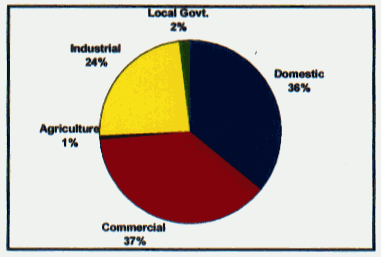
This is particularly important because of the high levels of electricity usage in commercial companies. The commercial sector consumes the largest proportion of the total electricity used in the region, see Figure 1.3. Domestic consumption is also high with consumers in the Mid West area’s accounting for nearly 7% of UK electricity consumption. It should be noted that the region has only 5.8% of the population.
FIGURE 1.3: Proportion of Total Electricity Consumption by Each Sector in the Mid West Area
1.3 Emissions in the Mid West Area
1.3.1 Overall Emissions Levels
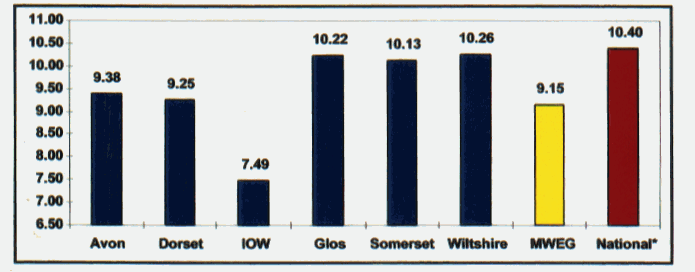
Overall emissions of polluting and greenhouse gases are at a similar level to the rest of the county when measured per capita. An example of this is the level of C02 emissions, see Table 1.3 and Figure 1.4.
TABLE 1.3: CO2 Emissions
| Region |
Tonnes/Capita/Year
|
| Avon |
9.39
|
| Dorset |
9.25
|
| Isle of Wight |
7.49
|
| Gloucestershire |
10.22
|
| Somerset |
10.13
|
| Wiltshire |
10.26
|
| MWEG |
9.15
|
| National* |
10.40
|
*Note: The national figures represent the emissions from the same sources as covered by the MWEG survey
FIGURE 1.4: CO2 Emissions Per Capita (Tonnes)
* Derived from Digest of UK Energy Statistics
1.3.2 Emissions from Electricity Use
More detailed analysis shows that there are higher than average emissions resulting from electricity use, this is shown in the figures for CO2 emissions in Table 1.4 and Figure 1.5. Evidence shows that CO2 emissions from electricity use are 19% higher than national per capita averages, possible explanations for this are:
- the lower proportion of homes connected to a gas supply and;
- a high concentration of commercial companies in the region with high electricity consumption e.g. Information Technology.
TABLE 1.4:CO2 Emissions from Electricity Use
| Region |
Tonnes/Capita
|
Kilotonnes/year
|
| Avon |
3.66
|
3,585.12
|
| Dorset |
3.59
|
2,415.84
|
| Isle of Wight |
2.85
|
355.66
|
| Gloucestershire |
4.17
|
2,289.77
|
| Somerset |
4.14
|
1,976.77
|
| Wiltshire |
3.80
|
2,225.73
|
| MWEG |
3.79
|
12,846.94
|
| UK* |
3.18
|
*Derived from Digest of UK Energy Statistics
FIGURE 1.5: CO2 Emissions Per Capita from Electricity Use (Tonnes)
* Derived from Digest of UK Energy Statistics
1.4.3 Emissions from Car Use
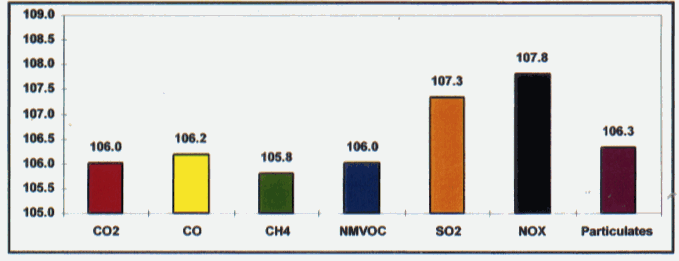
The emissions from energy use in cars in the Mid West area are higher than the national average when measured on a per capita basis. Figure 1.6 gives the emissions per capita indexed to the national average. This shows that theCO2 emissions in the Mid West area are 6% higher than the national average and that NOx emissions are 7.8% higher.
FIGURE 1.6: Emissions from Cars in the Mid West Area (Indexed to the National Average = 100)